Library resources have the capacity to enlighten and empower, but only for those who have the time, know-how, and ability to use them — making equitable access a complex concept. Financial challenges are another pressing issue for college students and can interfere with their education in myriad ways, such as through food insecurity or concerns over the cost of textbook materials.
In recent years the Library has implemented staff-wide practices to improve access, including the adoption of design principles that place accessibility at the center of user decision-making; taking care to emphasize that Library resources are available fully free of change — something not all incoming students are aware of; and providing broad accessibility training for staff. Other focus areas include:
Sure, you can visit the University of Virginia Library to borrow books (we have more than 5 million of them!), to find a cozy study space, or even to use a 3-D printer, but did you know we offer events ranging from workshops to performances for UVA and the Charlottesville community throughout the year?
Below, check out five upcoming events for those who love music, science, crafting, and gaming. All Library events are free.
The Library Sustainability Working Group created a Sustainability Plan this year to support the University’s goals to “advance sustainability leadership and impact by incorporating environmental, economic, and equity considerations in decision-making” by 2030. Grants and special projects
Guest post by Cecelia Parks, Undergraduate Student Success Librarian.
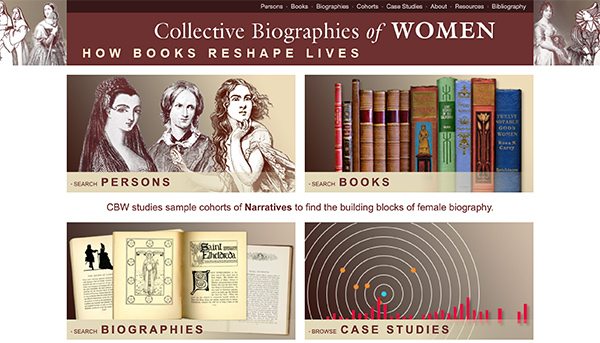
For Women’s History Month, we are highlighting the Collective Biographies of Women, a digital humanities project led by Alison Booth, Professor of English and Academic Director of the Scholars’ Lab. You can access the Collective Biographies of Women here.
Below, Booth answers questions about this massive project, which serves as a database of historical women as well as an annotated bibliography of more than 1200 books.
Q. How would you describe the Collective Biographies of Women (CBW) project?
We’re pleased to announce that the Women’s Maker Program has accepted its third cohort of Residents.
The Women’s Maker Program supports a makerspace program that’s designed to help increase Residents’ confidence and interest in STEM and makerspace technologies, improve their sense of belonging in the field, and better prepare them for future careers in the STEM workforce.
The Library of Virginia and the University of Virginia will host a talk in late September about the role libraries play in an increasingly AI-driven world.
“The idea is to train an artificial intelligence model to help with this speech recognition into text, and that requires a significant data set,” said Lisa Blackmore, the faculty director of UVA Library’s Digital Humanities Center. “This project is a great example of how AI can be used in experimental and creative ways as part of socially engaged research.”
“Reading feeds every creative community,” says Dr. Leo Lo, UVA’s university librarian and dean of libraries. “It expands what people can imagine, improves how they communicate, and trains the patience needed to make original work. Libraries keep that creative fuel available to everyone.”
“The same quality that makes a book valuable as training data makes it likelier to be scarce in the world,” Leo Lo, university librarian and dean of libraries at the University of Virginia, told Inc.