
The UVA Library was pleased to open the renovated Edgar Shannon Library (formerly "Alderman Library") in January, 2024. Between 2018 and 2024, HBRA Architects and Clark Nexsen partnered on a complete, 100,000 square foot restoration and a 130,000 square foot expansion that upgraded the library’s physical features and created a contemporary facility for the UVA community.
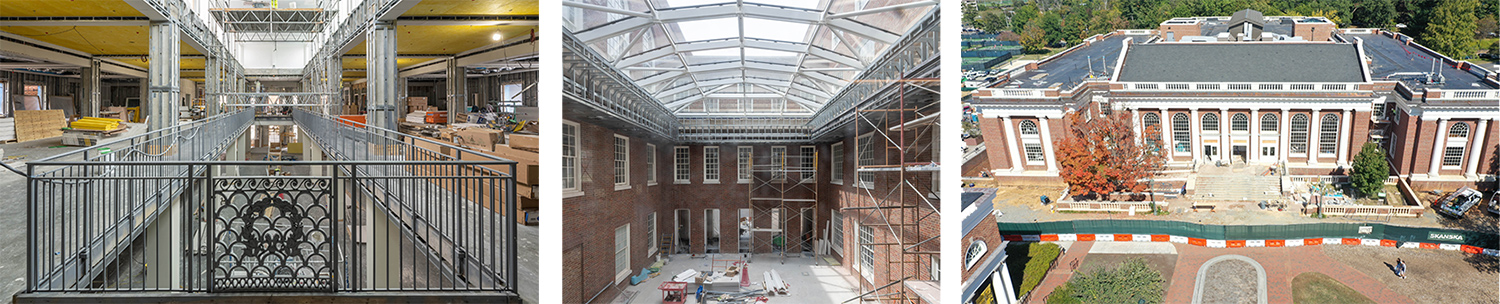
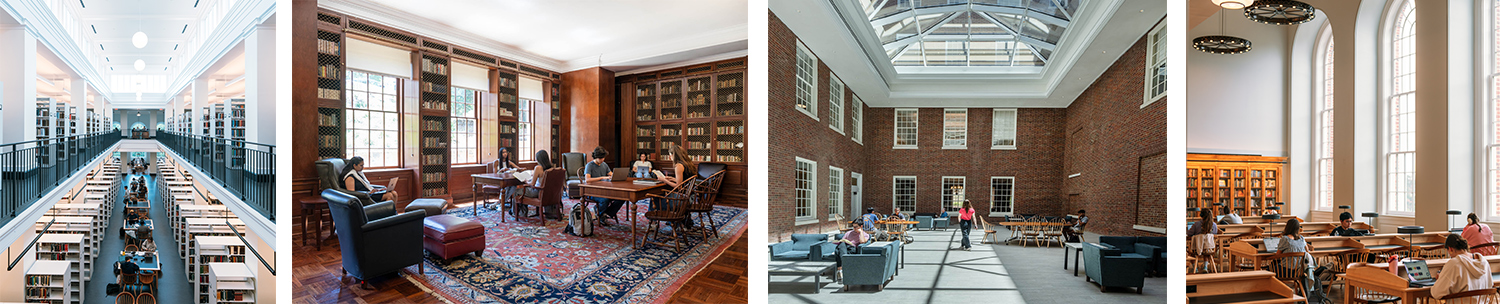
The renovation brought the library up to current standards of safety, accessibility, and service. A new entrance makes the building easily reachable from the growing northern corridor along University Avenue, and a larger south entrance makes the space easier to access from Grounds. The building offers better layout and natural light for members of the University community as they study, research, and socialize. Improved wayfinding (using signage and other design elements) makes the building more intuitive for visitors, and better facilities support the ongoing conservation and preservation of the Library’s large and growing print collection.
Much-loved features such as the McGregor (“Harry Potter”) Room remain — they’ve been renovated and optimized for comfort and character, preserving the essential elements of their unique identity.
Watch a short video about Shannon Library's Renovation and Reopening.
History of UVA's main library
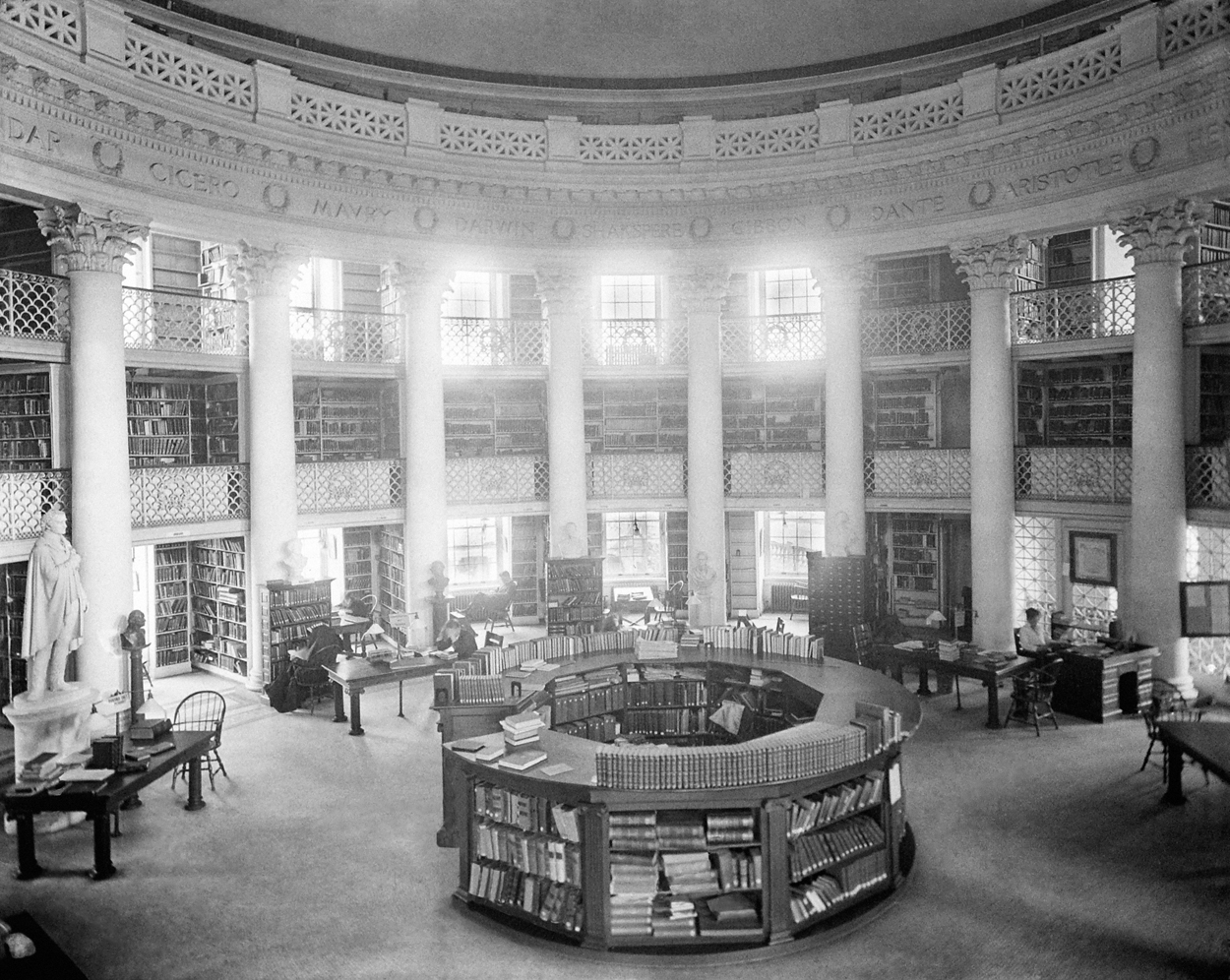
The history of the University of Virginia can be divided into three chapters, each marked by the construction of a library.
The Rotunda
The first chapter was the building of the Rotunda, the first library at UVA. Unlike other universities of its era, the University of Virginia was built around a library, rather than a chapel or other religious structure. This was symbolic of the central importance of knowledge to this university, and Thomas Jefferson himself was deeply engaged in selecting the materials that made up that library’s original collection, and in developing the system by which it would be organized. The Rotunda served as the University Library for over 100 years, until collections needs outgrew the Rotunda's capacity.
The building of a new main library
The building of what was then called Alderman Library, in 1937, marked the second important chapter of UVA’s history, as it was a response to the faculty’s demand for the volume and type of current information necessary to function as a research university. At the same time, the University committed to a very significant increase in annual spending on collections. Those collections, in turn, were housed in the stacks. Originally closed to most patrons, these stacks were laid out to maximize the storage of printed matter, and the stacks themselves were part of a state-of-the art integrated book storage system (the Snead Book Distributor) that included a book conveyor belt. Librarians picked requested titles from the shelves and dropped them on the belt, and they were delivered to the circulation desk.
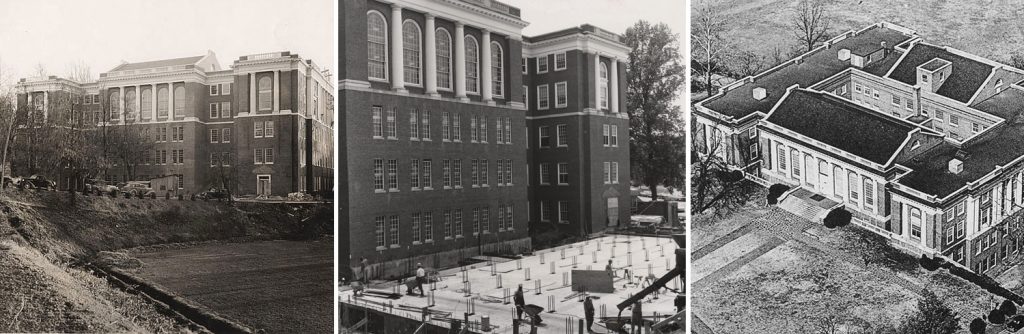
Library renovation, 2018-2024
 This latest renovation, which began in 2018, marked the third chapter in the University’s history, and the choices made in that renovation reflect what we think the future of research and scholarship will be, as well as what a great university needs in order to support those activities.
Prior to the renovation, the plumbing, as well as the wiring, the heating, and air conditioning were at the point of failure. Some of these systems were original to the building and were approaching 80 years of operation. Frequent fire alarms (and building evacuations) were the result of small failures in these systems, but they were also a reminder that there was no fire suppression in the building — no sprinkler systems in those stacks full of paper. The collections were at risk, but there were also real life-safety issues throughout the building, and these needed to be addressed.
 The general plan was to maintain the building’s character and its shell while replacing the interior with new LEED-quality construction and systems in order to house collections and services that support the University's mission in its third century. New construction opening onto University Avenue serves as the face of a Library that is sustainable and future-oriented, with elements of architectural diversity that respect the past, but are designed to accommodate change. The renovated space kept the large windows, the high ceilings, and the contemplative character that was valued in the original building.
Academic libraries serve multiple purposes for multiple constituencies, and we work diligently to understand and balance those needs. The expansion of Ivy Stacks, completed in 2017, was a key precursor of this project, as it allows the temporary off-site storage of items in the collection, with new preservation-quality HVAC.
Now that it has reopened and renamed, Shannon Library, like the Rotunda before it, reflects thoughtful organization of resources, interspersed with space to use those resources. The new building offers many different environments for study — from bookish spaces like the McGregor Room to spaces organized around other kinds of information or for other purposes, allowing for quiet study, group study, and social interaction.